Hi, my name’s Olivia. I’m a product manager with 7+ years of experience and a background in software development. I worked most recently at the Chan Zuckerberg Initiative, building products that democratized access to frontier scientific tools and methods (if you’re interested, check out my work benchmarking biological models or detecting pathogens via metagenomics). Most recently, I built The Find, an AI-powered interior design tool. It enables users to translate a Pinterest board of visual ideas into real items for their home. This post is the first in a series on the thinking and process behind creating The Find as a solo developer/designer/PM (scroll down for an overview of timeline & cost). In this first post, we’ll start with a bit of backstory.
Staying Close to the Build
As I progressed in my career and my focus was naturally pulled more and more towards strategy, I was beginning to lose touch with the day-to-day of actually building products. Getting stretched across an increasingly broad portfolio, my days were getting eaten up in cross-stream coordination and meetings and, while I appreciate that this work was impactful in its own way, the unfortunate side effect was that the prototyping work I was doing had shrunk to annotated screenshots on Figma boards or rushed sketches in my notebook. This hit me hard not only as a former software engineer, but also because, in my opinion, the best PMs - those that can successfully energize teams and build impactful products - never fully stop building even as they rise in seniority.
At the Lenny & Friends Summit in 2024, I heard Claire Vo’s prescient talk “Product Management is Dead” that outlined (and I’ll paraphrase from memory here) the idea that in order to be successful as a product manager in an AI world, the conceptualization of our jobs needs to expand to encompass skills from roles like design, engineering, and data analytics. The advent of LLMs and assistive tools like Claude Code means that roles are no longer strictly bounded entities. While I was invigorated by her talk in the moment, I found it challenging to see this come to fruition in my existing corporate job - one with established IT practices, ways of working, and role definitions - a sentiment and frustration that I have heard from others as well.
The Find
In February, this was solved for me when my position was eliminated at my former employer and I suddenly found myself with an abundance of time on my hands and a structure (an excellent Maven course1 that I had signed up for using my professional development budget) to keep myself on track and motivated. I decided to treat the situation as an opportunity and started building what I came to call The Find, an AI-powered, multi-agent interior design tool.
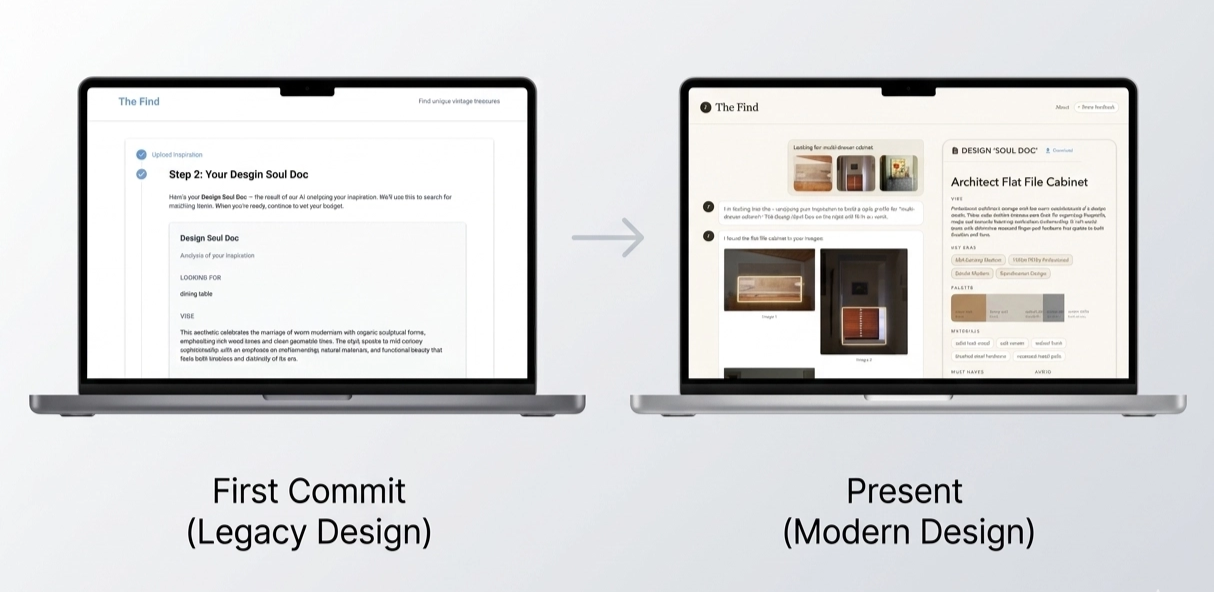
Working each day until my plan’s allocated tokens ran out, I built The Find over five weeks - from concept brainstorm to production deployment. Through the development process, as well as through some feedback from kind test users, I zeroed in on related problems I thought The Find could solve well: Where, and how, do you search, for vintage and second-hand items? Everything looks good in a highly stylized Pinterest room, but how do you know whether it will fit your existing space?
Over the course of building The Find as a team of one, Claire’s idea of how the role of product managers is changing really sprang to life for me. I learned so much through this process - the incredibly fast pace at which you can develop with AI, as well as where it still falls flat or where human skill clearly shines. I also got to dip my toes into buzzy topics - for example, learning what implementing evals actually looks like and how they can refine your prompts and deliver a better user experience.
A Preview of this Series
This series is designed to show how I think about product problems in the age of AI, with The Find as the backdrop. I hope this will help other PMs, or builders more generally, that may also be experimenting with AI. At a minimum, it will help me evolve my own process by putting it down on paper. Each subsequent post in this series will cover a particular challenge/solution that I encountered in my build process, and I’ll strive to be honest and transparent in what I did, how I did it, and what the result was, even if it reveals my own initial lack of knowledge.
To kick off the series, and in the vein of honesty and transparency, I’m sharing an overview of the timeline and cost for the initial build of The Find (below). In the next post, I’ll walk through the development of the “design soul doc”, a key model output that powers The Find.
Overview of Build Process: Cost & Time
- Time: 5 weeks (note: was not working 8 hours/day, 5 days/week)
- Cost of Initial Build: $181.60
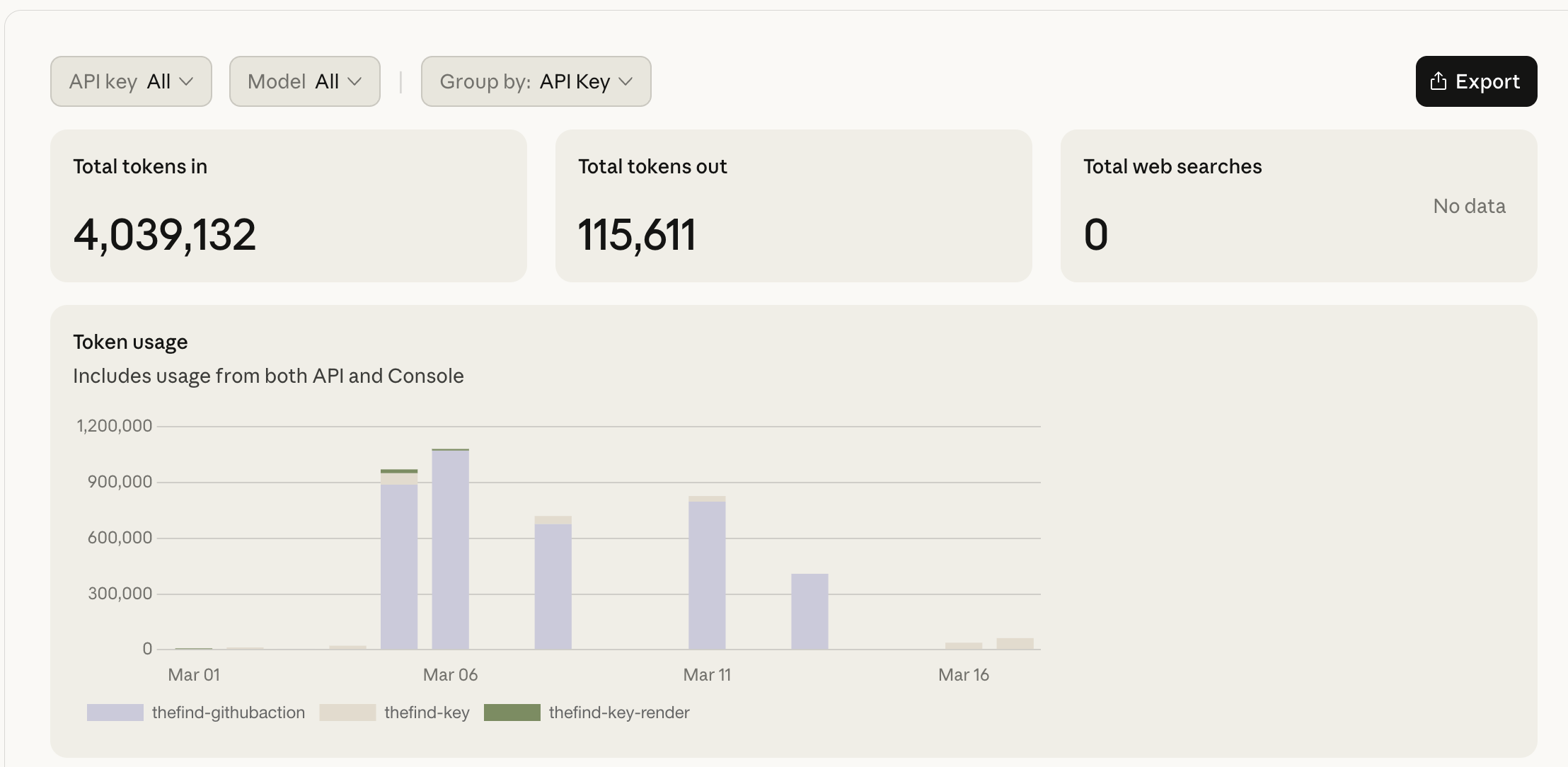
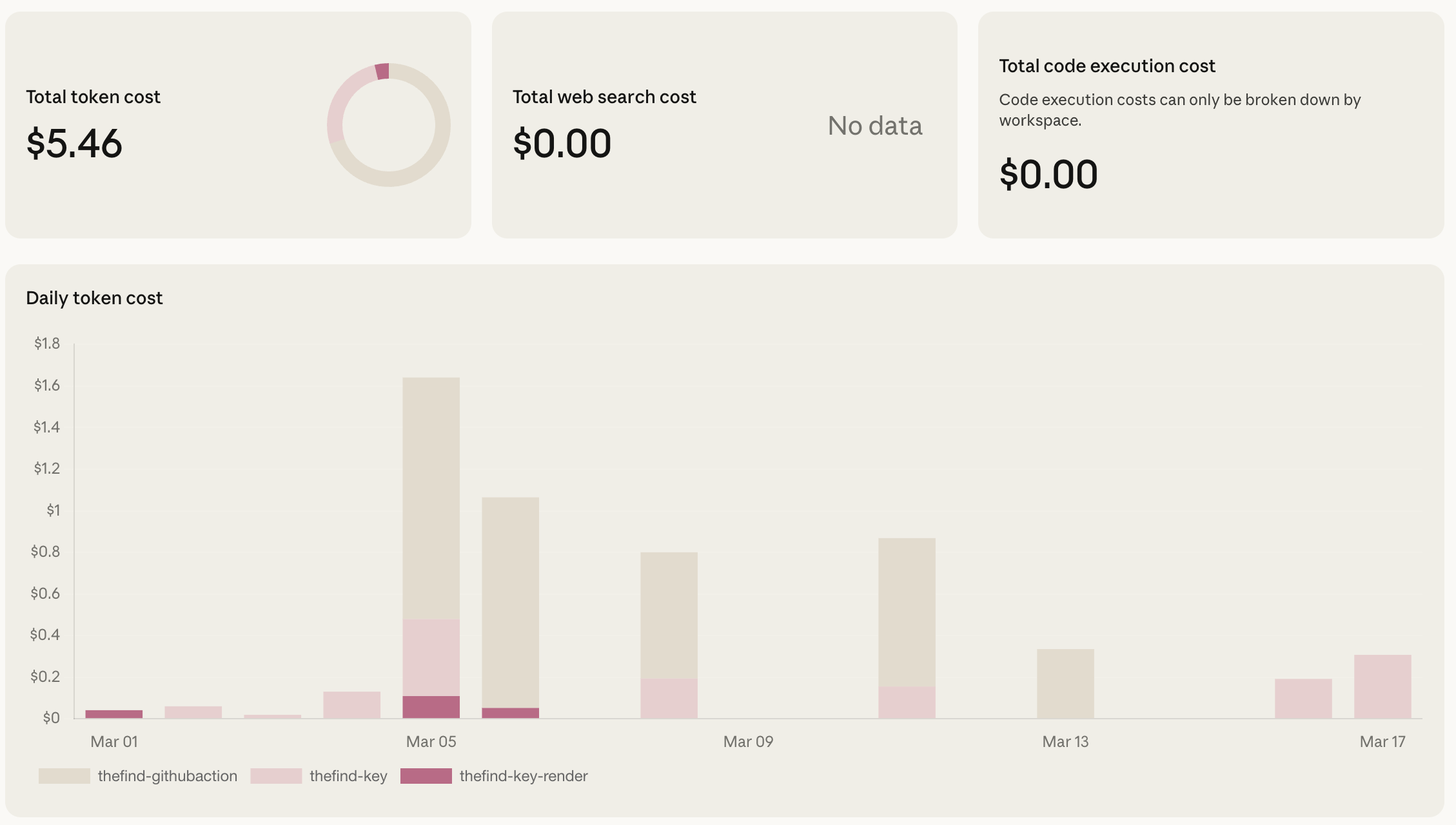
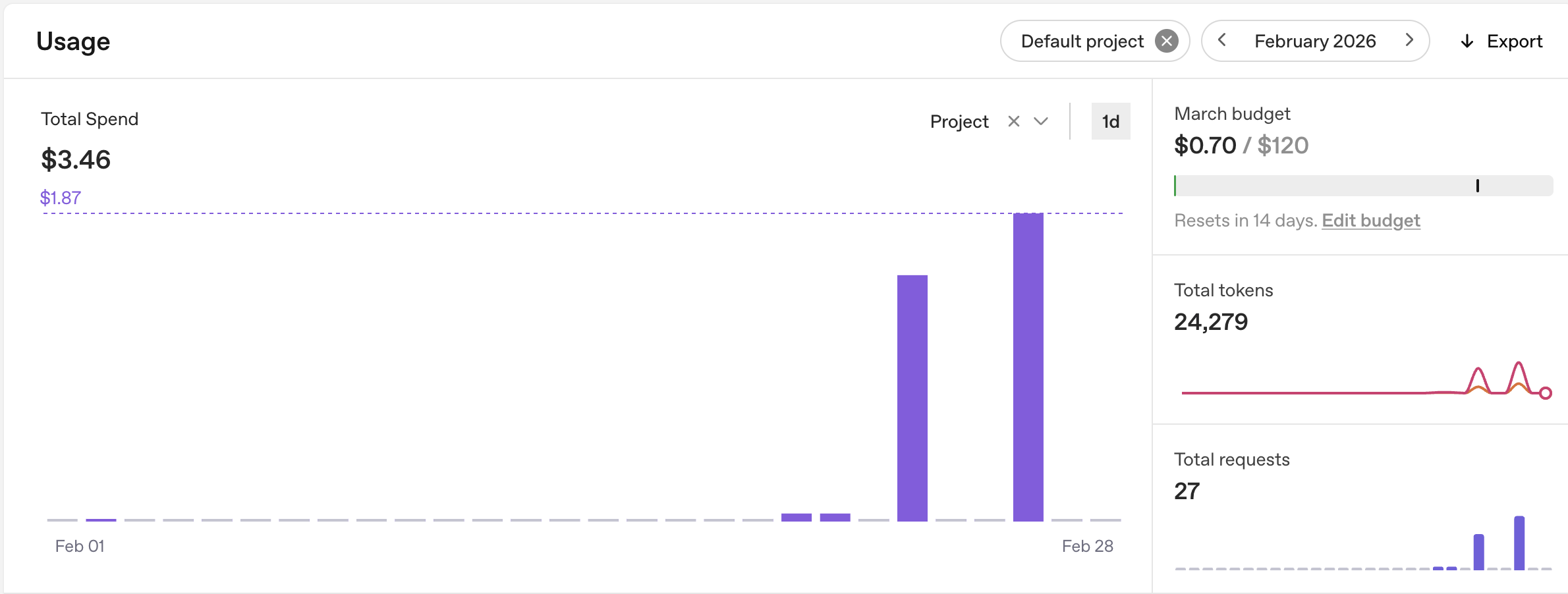
- Overall, I was happy with this cost. I did A LOT of testing while I was building, and nearly all of these calls handled images, which I anticipated being a lot more costly. I also made a few errors in how I used Claude Code that cost me about $40 (see table below). Chalk it up to learning-by-doing. Lastly, the “Max” plan from Claude Code also pays for web-based chat usage, so this includes usage beyond The Find.
Timeline for Initial Build (5 weeks)
| Week | What I did |
|---|---|
| Feb 2 - 8 | • Brainstormed potential ideas —> coalesced around idea and generated an initial “build doc” • Repo set up and pushed the initial build (pushing straight to main 🤪) • Tracing setup with Arize • Built out core feature set with Claude Code & Cursor |
| Feb 8 - 15 | • Big UI/UX Overhaul • Tried to diagnose web search issues • Created golden dataset in Arize with annotated traces (step one in evaluating model output) |
| Feb 16 - Feb 22 | • Removed web search for individual product listings from scope —> pivoted to a search “launchpad” |
| Feb 23 - March 1 | • Demo’ed The Find to Maven class • Deployed on Render |
| March 2 - March 8 | • First major user flow expansion with addition of “Room Inspiration” flow based on user feedback • Hardened Arize traces • Development workflow improvements (Github actions, etc.) |
Cost of Initial Build ($181.60)
| 2-Week Period | Item | Cost | Notes |
|---|---|---|---|
| Feb 2 - 15 | Cursor | $21.78 | Pro plan is $20/month |
| Anthropic | $21.78 | Max plan is $17/month | |
| Anthropic | $10.89 | Extra usage | |
| Anthropic | $10.89 | Extra usage | |
| Feb 16 - March 1 | Anthropic | $27.22 | Extra usage |
| Anthropic | $27.22 | Extra usage | |
| Anthropic | $27.22 | Made a mistake and didn’t realize I was on “extra usage mode” when I booted up Claude Code. Always start with your paid plan usage first! | |
| OpenAI | $10.89 | Image generation API | |
| Tavily | $1.49 | Web Search capabilities | |
| Render | $0.44 | Hosting & deployment | |
| March 2 - March 15 | Anthropic | $21.78 | Max plan is $17/month |
Deep Dives on Cost & Token Use
Footnotes
-
If you want the full step-by-step playbook, I’d highly recommend Aman Khan’s Maven course “Prototype to Production”, which will guide you through the same process I followed. ↩